Bread Knowledge
Sourdough Bread in Indianapolis: A Practical Guide
Sourdough can be crusty and dramatic or soft enough for a lunchbox. The common thread is natural leavening: flour and water become a living starter, and time does the work commercial yeast often rushes.
Field note 01
The four classic ingredients
At its simplest, sourdough is flour, water, salt, and starter. Starter is itself flour and water populated by wild yeast and beneficial bacteria. Its activity raises the dough while fermentation develops acidity, aroma, and complexity.
Simple ingredients do not mean a simple schedule. Temperature, hydration, flour choice, starter strength, and time all change how the dough behaves. A baker learns to read the dough rather than obey the clock alone.
Field note 02
Rustic versus sandwich sourdough
Rustic sourdough celebrates a substantial crust, irregular crumb, and satisfying chew. It belongs beside soup, on a gathering board, or simply under good butter.
Sandwich sourdough is designed around daily usefulness. Its crumb is softer, its slices are more even, and it holds fillings without turning lunch into a structural exercise. Both can be authentic sourdough; they are built for different tables.
Field note 03
How flavor enters the loaf
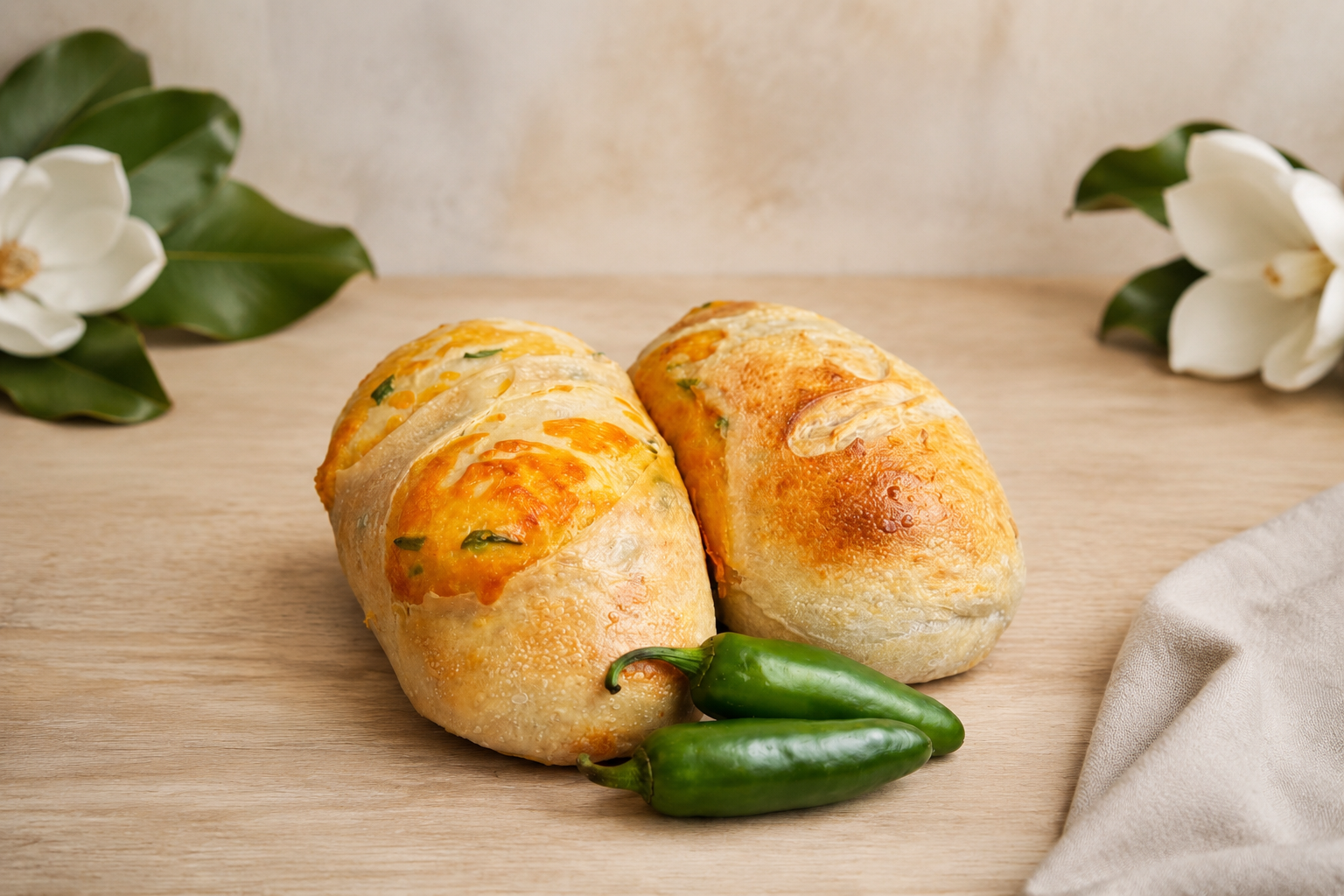
Fermentation creates the foundation, but a loaf can carry a season. Savory additions such as roasted onion, rosemary, dill, jalapeño, or cheese move naturally toward dinner. Apple cinnamon, blueberry lemon, and chocolate make bread feel closer to breakfast or dessert.
The best additions support the dough rather than bury it. Texture, moisture, and the timing of inclusions all matter, especially in a loaf made by hand.
Field note 04
Buying and keeping sourdough
- Choose rustic for crust and table service; choose sandwich for soft, even slices
- Protect the cut surface if you will finish the loaf quickly
- Freeze well-wrapped portions for longer storage
- Avoid the refrigerator for routine storage because it accelerates staling
Field note 05
Try one loaf at home
Our Sourdough Field Guide includes a home-scale, four-ingredient recipe for one loaf. It is intentionally straightforward and includes the most useful premium tip: watch the dough, not merely the clock.