At the Table
Powdered-Sugar Glaze: Ratios, Texture, and Better Results
Powdered-sugar glaze is simple enough to improvise and sensitive enough to punish a careless pour. The secret is adding liquid slowly and deciding what the glaze needs to do before you mix it.
Field note 01
Begin with the job
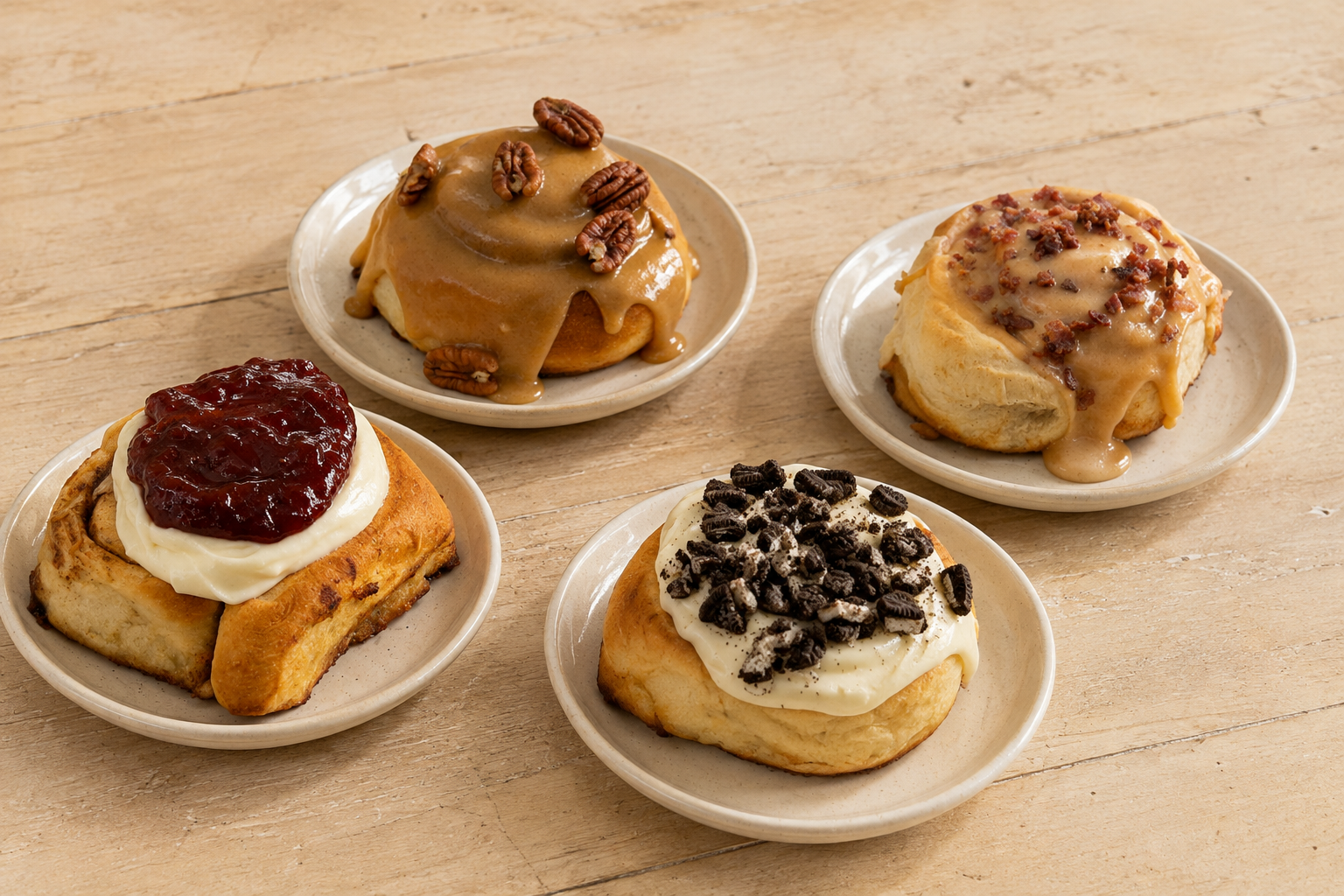
A thin glaze should settle into the ridges of a warm cinnamon roll. A thicker drizzle should remain visible on top. Both can begin with powdered sugar, a small amount of milk or cream, a pinch of salt, and vanilla.
Sift the sugar, then add liquid a little at a time. A tablespoon can be the difference between a controlled ribbon and a glaze that disappears onto the plate.
Field note 02
Read the ribbon
- Too thick: add liquid by the teaspoon, whisking fully after each addition
- Too thin: add sifted powdered sugar a spoonful at a time
- Lumpy: sift first and whisk before adding more liquid
- Not setting: the ratio may be too wet or the rolls may be too hot
Field note 03
Warm roll, not hot roll
A piping-hot roll melts glaze immediately. That can be useful for a thin first coat but frustrating when you want a visible finish. Let the roll cool slightly, then glaze in two passes: a light layer that sinks into the folds, followed several minutes later by a thicker drizzle.
Field note 04
Build flavor without losing cinnamon
Citrus zest, maple, vanilla, or warm spice can all work, but the finish should support the roll. Brown butter is especially useful because it adds toasted, nutty depth without requiring a heavy icing.
Our Cinnamon Roll Field Guide includes exact home-batch quantities for brown-butter powdered-sugar glaze sized for nine rolls.