Bread Knowledge
What Makes a Memorable Cinnamon Roll?
A cinnamon roll should not make you hunt for the good part. Every bite needs tender dough, cinnamon, caramelized edges, and enough finish to bring the whole roll together.
Field note 01
Why shape changes flavor
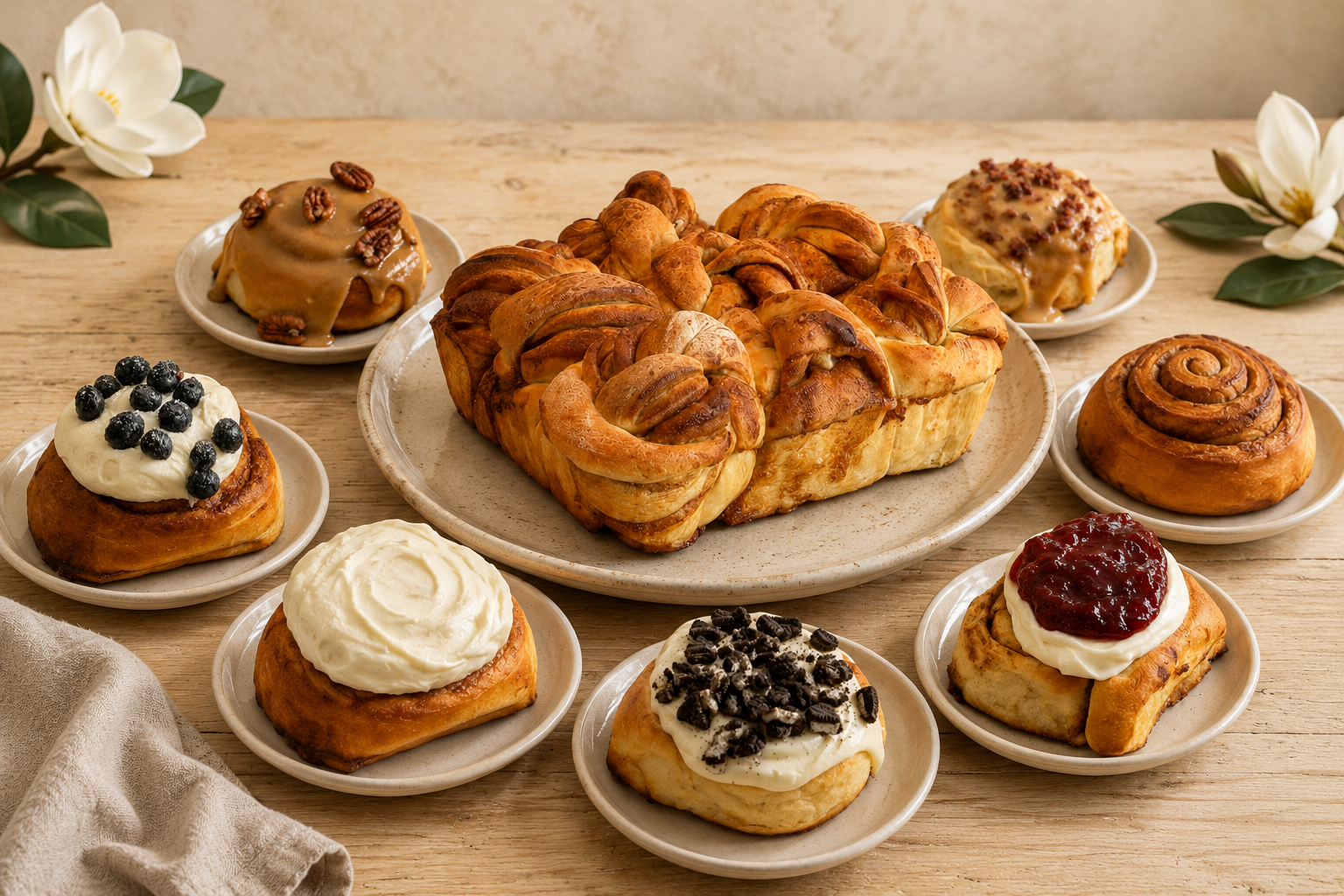
The familiar spiral concentrates filling into defined rings. A twist exposes more cinnamon-rich surface, creating distinct ribbons, more caramelized edges, and places for glaze or icing to settle.
That structure is not decoration added after the fact. It changes the ratio of filling to bread and makes a substantial roll feel layered rather than heavy.
Field note 02
The tender center
Enriched dough needs enough strength to hold its shape and enough restraint to remain tender. Over-flouring can make a roll dry; overbaking can erase the soft center people came for. Small-batch attention matters because the baker can watch the dough and the oven rather than rely only on a factory schedule.
Field note 03
Glaze or cream-cheese icing?
Powdered-sugar glaze is light, sweet, and nostalgic. Cream-cheese icing adds body and a subtle tang. Neither is universally better. A rich roll may benefit from a lighter glaze, while a simpler cinnamon profile can carry a fuller icing.
For a different home finish, our Cinnamon Roll Field Guide includes a brown-butter powdered-sugar glaze with a two-pass application method.
Field note 04
Why they sell quickly
Fresh rolls are best close to the bake, so responsible production is finite. The Bread Barn plans around preorders, then adds a limited number for walk-up shopping. When those are gone, the next batch belongs to the next Market Weekend.
Field note 05
Reheating without rebaking
Let a refrigerated roll lose some of its chill, then warm it gently. Begin with 10 to 15 seconds in the microwave and assess. The goal is to soften the crumb and wake up the cinnamon—not dry the roll with a second full bake.
Short warmth, then patience. You can always add a few seconds; you cannot take them back.